
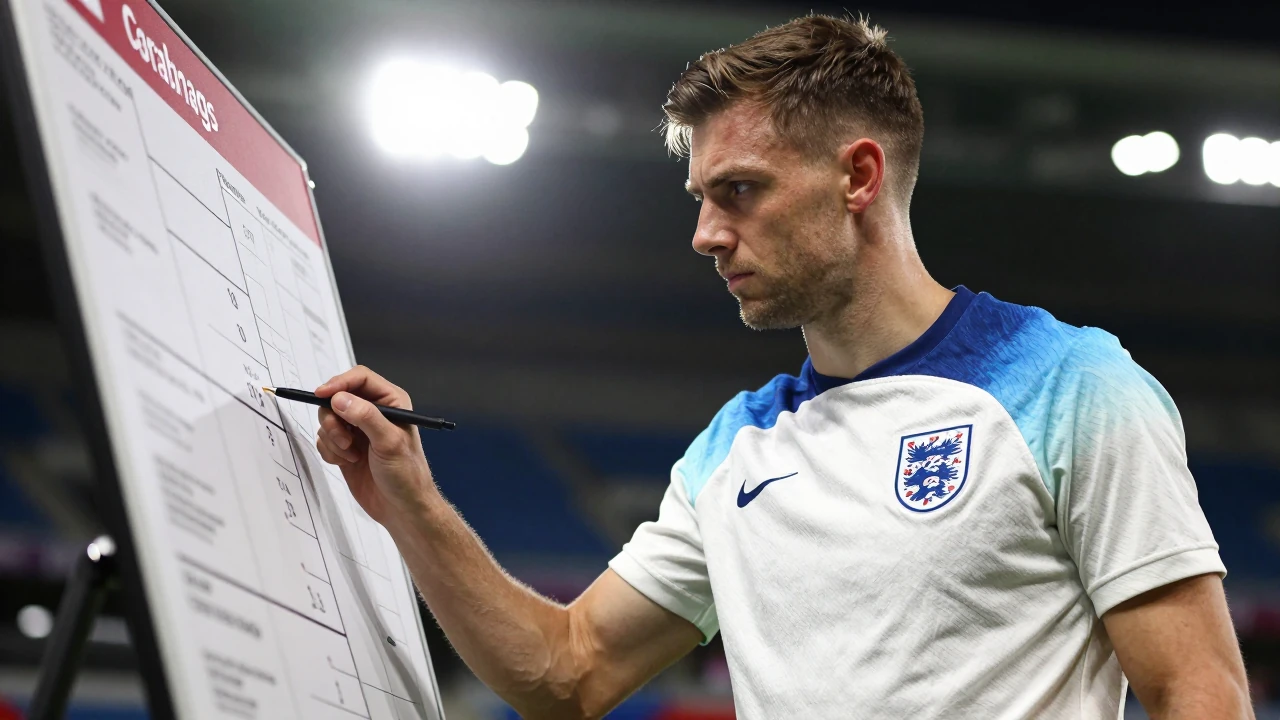
The absence of Trent Alexander-Arnold in the England World Cup squad has ignited fierce debate among fans and pundits alike. As the Three Lions gear up for a critical campaign in the FIFA World Cup 2026, the question arises: how will they cope without one of the most creative talents in football? With England's recent performances showcasing a worrying lack of attacking flair, the decision to exclude Alexander-Arnold could prove pivotal in their quest for international success.
Tactical Breakdown
Gareth Southgate, England's manager, has faced scrutiny for his tactical choices this season. While he has often prioritised a solid defensive structure, this approach may have come at the expense of offensive creativity. Alexander-Arnold has consistently demonstrated his ability to deliver deadly crosses and incisive passes from the right flank, elevating his team’s attacking play at club level with Liverpool.
To fully understand the tactical implications of his exclusion, consider the statistics: - Alexander-Arnold provided 15 assists in the 2022-2023 Premier League season. - His ability to create chances from set pieces and open play is unmatched among his peers. - In contrast, England's squad lacks players with similar creative instincts, relying heavily on the more conservative style of players like Reece James and Kyle Walker.
Additionally, Southgate's preference for a 4-3-3 formation requires dynamic wing-backs who can contribute to both defence and attack. Without Alexander-Arnold, the team risks becoming predictable, often resorting to slow build-up play lacking penetration. Fans can’t help but recall the 2020 UEFA European Championship, where England struggled to break down deep-lying defences.
What It Means for England
The decision to leave out Trent Alexander-Arnold may signify a broader problem within the England squad: a lack of creativity that could hinder their performance on the world stage. While Southgate aims for a balanced side, creativity should not be sacrificed for the sake of defensive solidity. If England continues down this path, they might find themselves unable to break down organised defences, leading to frustrating draws or narrow defeats.
Moreover, the fanbase is divided. Some supporters laud Southgate's commitment to a pragmatic style, believing it lays a solid foundation. However, many others are vocal about their dissatisfaction, arguing that without creative players like Alexander-Arnold, the Three Lions will struggle to compete against more adventurous teams.
The Wider Championship Picture
As England prepares for the World Cup, they must consider the broader context of international football. Other national teams, such as France and Brazil, boast squads filled with creative talents capable of turning matches on their heads. Players like Kylian Mbappé and Neymar exemplify the kind of flair that can turn a tight game in favour of their teams. In this context, England's decision to omit Alexander-Arnold looks increasingly questionable.
Furthermore, the European Championships and World Cup 2026 will feature teams that excel in exploiting defensive weaknesses. If England cannot adapt and evolve their tactics to include a more dynamic approach, they risk falling behind in the international pecking order. The lack of creativity could lead to early exits in crucial knockout stages, echoing past disappointments.
Fan Reaction and Outlook
The reaction from fans has been overwhelmingly mixed, with many expressing disbelief over Alexander-Arnold's exclusion. Social media platforms have been abuzz, with hashtags like #BringBackTrent trending as supporters make their voices heard. Some fans argue that Southgate's decision reflects his outdated views on the game, while others believe it points to a deeper issue within the English football system, which often overlooks creative talents in favour of a more conservative approach.
- Pros of Inclusion:
- Adds creativity to the right flank.
- Provides exceptional crossing ability.
- Enhances set-piece threat.
- Cons of Exclusion:
- Reduces attacking options.
- Risks stagnation in play.
- May lead to predictable tactics.
If you’re following the national team closely, you’ll know that the upcoming friendly matches will be crucial for assessing Southgate’s tactical flexibility. England must find a way to integrate creativity without compromising their defensive structure. The upcoming fixtures against teams like Italy and Germany could provide a litmus test for the squad’s adaptability.
Counterpoint: A Case for Tactical Consistency
Critics will argue that Southgate’s strategy has yielded results in the past. The flip side is that this style has often been effective against weaker opponents, allowing England to maintain clean sheets and secure narrow victories. By focusing on a solid defensive foundation, Southgate believes he can create opportunities from counter-attacks, a strategy that has worked well in qualifiers. However, this approach may falter against teams that can match England’s physicality and tactical discipline.
What’s Next
As the Three Lions move closer to the FIFA World Cup 2026, fans will be watching closely to see how Southgate navigates the squad dynamics without Trent Alexander-Arnold. The upcoming friendlies will be a critical test for England’s ability to innovate and adapt. If the team fails to find solutions, the absence of creative players might be a significant factor in their performance, potentially leading to another disappointing campaign.
The stakes are high, and the time for experimentation is now. With the World Cup just around the corner, England must find a way to infuse creativity back into their game plan. Otherwise, the dreams of lifting the trophy will remain just that-a dream.